Expected starting date: October 1st, 2026
Duration: 3 years
Funding: PEPR 5G France 2030 – EXCELL-FR3 project
Place: LEAT, Bât. Forum, Campus Sophia Tech, 930 route des colles, 06903 Sophia Antipolis, France
Keywords: 5G, 6G, antennas, FR3 band, multi-beam beamforming, mobile terminal, MIMO, reconfigurable
radiating surfaces, Cell-Free networks
Context
The EXCELL-FR3 project is part of the “PEPR 5G et Réseaux du Futur” France 2030 program [1-2], which
aims to explore advanced communication architectures for future generations of mobile networks (6G).
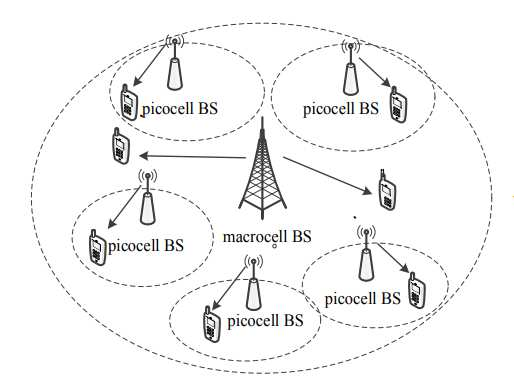
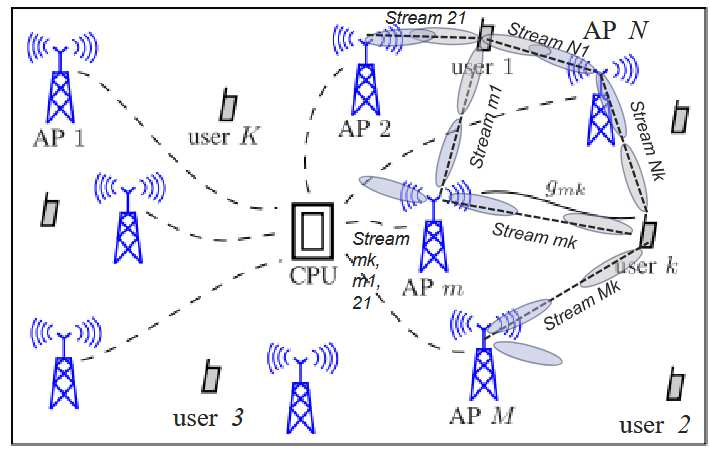
Coordinated by LEAT (Université Côte d’Azur) in collaboration with CEA-LETI and EURECOM, it investigates the use of the FR3 band (7.2-8.4 GHz) within the framework of Cell-Free Massive MIMO networks. In these architectures, users are no longer associated with a single base station but are served in a distributed manner by a set of cooperative access points, enabling improved service uniformity and spectral efficiency.
The FR3 band offers an attractive trade-off between available bandwidth and the feasibility of integrating compact antennas, making it a relevant candidate for future 6G systems [3-5].
Problem Statement
Cell-Free architectures strongly rely on the ability of the terminal to simultaneously establish
multiple optimized radio links with distributed access points [6-9].
However, current mobile terminals mainly rely on weakly directive or poorly reconfigurable antennas, which limits:
- spatial management of the radio link [10],
- energy efficiency of radiation [11-12],
- control of electromagnetic exposure [13].
In this context, the thesis aims to explore the design of compact radiating surfaces capable of generating multiple reconfigurable beams in the FR3 band, while meeting mobile terminal integration constraints.
Objective and work description
The main objective is to design, model, and characterize reconfigurable multi-beam antenna structures for FR3 mobile terminals, compatible with Cell-Free communication scenarios.
More specifically, the PhD will aim to:
- Design compact and directive radiating elements suitable for the FR3 band and terminal integration constraints
- Develop architectures enabling the generation of multiple independent beams (multi-beam operation)
- Investigate decoupling techniques between radiating elements
- Propose a hybrid beamforming architecture (analog/digital) adapted to energy-efficient constraints
- Evaluate overall system performance, including spatial coverage and electromagnetic exposure aspects.
Required skills
Education: MS or equivalent.
Background: microwave, antennas, electromagnetics. Knowledge in EM simulation tools (ADS, CST, HFSS) is welcome.
To apply
Please provide detailed CV, motivation letter and reference letters to Aliou DIALLO (aliou.diallo@univ-cotedazur.fr), Philippe LE THUC (philippe.le-thuc@univ-cotedazur.fr) and Robert STARAJ (robert.staraj@univ-cotedazur.fr).
Thèse : Conception de surfaces rayonnantes multi-faisceaux reconfigurables pour terminaux
mobiles en bande FR3 (7,2-8,4 GHz)
Date de commencement souhaité : 1er octobre 2026
Durée : 3 ans
Financement : PEPR 5G France 2030 – projet EXCELL-FR3
Lieu : LEAT, Bât. Forum, Campus Sophia Tech, 930 route des colles, 06903 Sophia Antipolis, France
Mots-clés : 5G, 6G, Antennes, Bande FR3, beamforming multi-faisceaux, terminal mobile, MIMO, surfaces rayonnantes reconfigurables, Cell-Free
Contexte
Le projet EXCELL-FR3 s’inscrit dans le cadre du programme PEPR 5G et Réseaux du Futur France 2030
[1-2], visant à explorer les architectures de communication avancées pour les futures générations de réseaux mobiles (6G). Coordonné par le LEAT (Université Côte d’Azur) en partenariat avec le CEA-LETI et EURECOM, il étudie l’exploitation de la bande FR3 (7,2-8,4 GHz) dans le contexte des réseaux dits Cell-Free Massive MIMO.
Dans ces architectures, les utilisateurs ne sont plus associés à une station de base unique, mais servis de manière distribuée par un ensemble de points d’accès coopératifs, permettant d’améliorer l’uniformité de service et l’efficacité spectrale.
La bande FR3 présente un compromis intéressant entre large bande passante disponible et faisabilité d’intégration d’antennes compactes, constituant ainsi un candidat pertinent pour les futurs systèmes 6G [3-5].
Problématique
Les architectures Cell-Free reposent fortement sur la capacité du terminal à établir
simultanément plusieurs liens radio optimisés vers des points d’accès distribués [6-9].
Cependant, les terminaux actuels reposent principalement sur des antennes peu directives ou faiblement
reconfigurables, limitant :
- la gestion spatiale du lien radio [10],
- l’efficacité énergétique du rayonnement [11-12],
- le contrôle de l’exposition électromagnétique [13].
Dans ce contexte, la thèse propose d’explorer la conception de surfaces rayonnantes compactes capables de générer plusieurs faisceaux reconfigurables en bande FR3, adaptées aux contraintes d’intégration des terminaux mobiles.
Objectifs et description du travail
L’objectif principal est de concevoir, modéliser et caractériser des structures antennaires multi-faisceaux reconfigurables pour terminaux FR3, compatibles avec des scénarios de communication Cell-Free.
Plus spécifiquement, la thèse vise à :
- Concevoir des éléments rayonnants compacts et directifs adaptés à la bande FR3 et aux contraintes d’intégration terminal
- Développer des architectures permettant la génération de plusieurs faisceaux indépendants (multi-beam)
- Etudier des techniques de découplage entre éléments rayonnants
- Proposer une architecture de beamforming hybride (analogique/numérique) adaptée aux contraintes de consommation énergétique
- Evaluer les performances globales des systèmes proposés, incluant les aspects de couverture spatiale et d’exposition électromagnétique.
Compétences requises
Le/la candidat(e) justifiera d’un master II ou d’un diplôme d’ingénieur avec une spécialisation micro-onde, hyperfréquence ou antennes avec un goût prononcé pour les démarches de modélisations, simulations tout en tenant compte de l’aspect prototypage associé. Une bonne maîtrise de l’anglais est indispensable. La connaissance pratique de logiciels de simulations électromagnétiques (HFSS, CST, ADS, autres) sera très appréciée.
Pour candidater
Merci d’adresser un CV détaillé, relevés de notes récents, lettres de motivation et de
recommandation à Aliou DIALLO (aliou.diallo@univ-cotedazur.fr), Philippe LE THUC (philippe.le-thuc@univ-cotedazur.fr) et Robert STARAJ (robert.staraj@univ-cotedazur.fr).
References
[1] https://pepr-futurenetworks.fr/frame-xg/.
[2] https://anr.fr/fr/france-2030/programmes-et-equipements-prioritaires-de-recherche-pepr/reseaux-du-futur/.
[3] https://research.samsung.com/blog/Upper-Mid-Band-Spectrum-for-6G-Opportunities-and-Key-Enablers.
[4] A. Bazzi, R. Bomfin, M. Mezzavilla, S. Rangan, T. Rappaport et M. Chafii, «Upper Mid-Band Spectrum for 6G: Vision, Opportunity and Challenges,» arXiv:2502.17914 , 2025.
[5] D. Shakya et al, «D. Shakya et al., Comprehensive FR1(C) and FR3 Lower and Upper Mid-Band Propagation and Material Penetration Loss Measurements and Channel Models in Indoor Environment for 5G and 6G,,» IEEE Open Journal of the Communications Society, vol. 5, pp. 5192-5218 doi: 10.1109/OJCOMS.2024.3431686, 2024.
[6] X. Yan, Z. Wang, Y. Jia, Z. Zhang et Y. Huang, «Access Point Selection and Beamforming Design for Cell-Free Network: From Fractional Programming to GNN,» IEEE Transactions on Wireless Communications, vol. 23, n° %18 doi: 10.1109/TWC.2024.3361900, pp. 9345-9360, 2024.
[7] S. Dhalbisoi, A. Rout, R. K. Sahoo et S. Sethi, «A Comparative Analysis On 5G Cell Free Massive Mimo In Next Generation Networking Environment,» International Conference on Intelligent Controller and Computing for Smart Power (ICICCSP), Hyderabad, India, pp. 1-5, doi: 10.1109/ICICCSP53532.2022.9862350, 2022.
[8] S. Kim et B. Shim, «AoD-Based Statistical Beamforming for Cell-Free Massive MIMO Systems,» 2018 IEEE 88th Vehicular Technology Conference (VTC-Fall), Chicago, IL, USA,, pp. 1-5, doi: 10.1109/VTCFall.2018.8690646., 2018.
[9] M. Ito, S. Fukue, K. Ando, I. Kanno, K. Yamazaki et D. K. Ishibashi, «Clustering and Beamforming for User-Centric,» IEEE Access, vol. 12 DOI: 10.1109/ACCESS.2023.3346903, pp. 382-395, 2024.
[10] G. Interdonato, E. Björnson, H. Q. Ngo, P. Frenger et E. G. Larsson, «Ubiquitous cell-free Massive MIMO,» communications. J Wireless Com Network, 2019 doi: 10.1186/s13638-019-1507-0.
[11] L. A. Bronckers, A. Roc’h et A. B. Smolders, «Benchmarking a High-End Smartphones,» IEEE Access, vol. 7, pp. 105680-105686, 2019.
[12] N. Serafimov, P.-S. Kildal et T. Balin, «Comparison between radiation efficiencies of phone antennas and radiated power of mobile phones measured in anechoic chambers and reverberation chamber,» IEEE Antennas and Propagation Society International Symposium (IEEE Cat. No.02CH37313), San Antonio, TX, USA, vol. 2, pp. 478-481 doi: 10.1109/APS.2002.1016126, 2002.
[13] Naren, A. Elhence, V. Chamola et M. Guizani, «Notice of Retraction: Electromagnetic Radiation Due to Cellular, Wi-Fi and Bluetooth Technologies: How Safe Are We?,» IEEE Access, vol. 8 doi: 10.1109/ACCESS.2020.2976434, pp. 42980-43000 , 2020.